Ipinapakita ang mga post na may etiketa na People. Ipakita ang lahat ng mga post

Sabado, Pebrero 26, 2011

revolution


Years ago, I didn't think anything would happen when I joined some outreach activities. I just wanted to get out there and help. Then, I told some friends about it and sent them an email with the details. They weren't really into it. So I thought, well that's that. But I didn't know that the word had spread. Now, I see posts in facebook from co-workers that I didn't really know that well, inviting people to the same outreach I joined years ago.

Another friend thanked me when I invited her to join a training seminar I attended for special kids. She said she was planning to do that full-time in the future and the seminar will be her starting point. I'm so happy to know that others are also getting involved.

You may think that what you're doing doesn't influence anyone but it does. Last Friday, we celebrated the 25th anniversary of the EDSA Revolution. It was also last Friday when angry protests calling for change swept Middle East. Both of these revolutions started from small seeds, and it grew and grew and grew, until it became a revolution. From one simple act, like Rosa Parks saying "I ain't movin" and refusing to give up her seat for a white passenger, you can make change happen. Even if it's small, it will ripple out. It's a start.

Biyernes, Pebrero 11, 2011

how to be alone


A video by filmmaker, Andrea Dorfman, and poet/singer/songwriter, Tanya Davis.

~Society is afraid of alonedom, like lonely hearts are wasting away in basements, like people must have problems if, after a while, nobody is dating them. But lonely is a freedom that breaths easy and weightless and lonely is healing if you make it...

Happy ♥ Day everyone!

Sources:
http://www.youtube.com/watch?v=k7X7sZzSXYs

http://www.tanyadavis.ca
http://www.andreadorfman.com

Lunes, Enero 31, 2011

rescuing art


When World War II ended, a group of men and women began hunting for works of art inside salt mines, caves and castles. They found more than 6,500 pieces in a salt mine near Salzburg, including Da Vinci’s “Lady with an Ermine”. In another German mine, they uncovered a Rembrandt self-portrait, along with others hidden there by the museums. The atmosphere in these caves, cool temperatures and moisture in the air, helped in preserving the paintings. It also protected them against the war, the bombs, the Nazis and the looting.

Who are these people so committed to saving our art?

They.. are the Monuments Men..   (superhero entrance music plays)

Kidding aside, these people are real life heroes that played a crucial role during WWII. They hid art, sometimes even moved it to different places, and risked their lives in doing so. Here's an excerpt from monumentsmen.com:


The “Monuments Men”, were a group of approximately 345 men and women from thirteen nations who comprised the MFAA section during World War II. Many were museum directors, curators, art historians, artists, architects, and educators. Together they worked to protect monuments and other cultural treasures from the destruction of World War II. In the last year of the war, they tracked, located, and in the years that followed returned more than five million artistic and cultural items stolen by Hitler and the Nazis. Their role in preserving cultural treasures was without precedent.

Today, like the art they protected and found, there is an ongoing quest for the stories of their lives.  The Monuments Men Foundation is now in its fifth year of research for their bios.  Some are already complete, some only with pictures, while others are still just a name.  Click here to help out.  Who knows, maybe you'll find you knew one of them all along.

Sources:
http://www.monumentsmenfoundation.org
http://www.popmatters.com/pm/article/little-known-monuments-men-hunted-art-treasures-stolen-by-nazis/
http://www.wikipedia.com

Biyernes, Disyembre 3, 2010

people

Ships that pass in the night, and speak each other in passing, only a signal shown, and a distant voice in the darkness; So on the ocean of life, we pass and speak one another, only a look and a voice, then darkness again and a silence.
~ Henry Wadsworth Longfellow


Miyerkules, Setyembre 22, 2010

happy birthday, andrea bocelli!

When Andrea's mother was pregnant with him, she became sick and had to be admitted to the hospital.  Doctors made a mistake with the diagnosis.  They thought she was having appendicitis.  She received treatments, like having ice applied on her stomach.  After it was over, they advised her to abort the child.

"They told her it was the best solution because the baby would be born with some disability," he says.

She refused to listen and chose to keep the baby instead, and so in September 22, 1958, world-class tenor Andrea Bocelli was born.

There are many good arguments on why people choose to abort or even abandon a child, but there's so much more that we do not know and understand.  There's a lot of things we cannot foresee.  Life has its reasons too.


Sources:
http://en.wikipedia.org/wiki/Andrea_Bocelli
http://www.christianpost.com/article/20100623/renowned-singer-andrea-bocelli-tells-abortion-story/index.html
http://www.dailymail.co.uk/news/worldnews/article-1285058/Andrea-Bocelli-praises-mother-aborting-doctors-told-born-disabled.html

Biyernes, Agosto 20, 2010

loofah

Before writing this entry, I had always associated the word "loofah" with the scrubber used for cleaning the body.  I never thought it's the actual english name of a vegetable, and it's a vegetable I'm very familiar with.  We call it "patola" here in the Philippines. I always associate it with the yummy dish, "patola with miswa".


In Paraguay, the loofah is improving lives. In a project headed by social activist, Elsa Zaldívar, local women in Caaguazú started planting and processing the vegetable. They made products like mats, slippers and insoles out of dried loofahs. It was a successful venture and they were even able to export it to Europe. It gave the women a steady source of income.

However, a lot of raw material were still wasted, so Elsa got the help of industrial engineer, Pedro Padrós, to see if they can use it to build houses for the people.


“We want to find sustainable housing alternatives for the poor, while also discovering new markets for their agricultural products, particularly the loofah. This is a perfect combination,” she says.

Pedro was able to create a machine that melts plastic, and he mixed the result with loofah and other vegetable fibres. After lots of experimentation, they produced a sturdy material that's lightweight, safe and recyclable. They also received a grant from Inter-American Development Bank for the development of another machine that can produce the housing panels.

“Because we’re using fibres that are completely renewable, we can stop using lumber for construction. That’s very important in Paraguay because we’ve already reduced our original forest to less than ten per cent of Paraguay’s territory,” Elsa said. “We’re running out of trees.”

As a result of her work, Elsa was awarded the Rolex Award for Enterprise last 2008. They will be using the money to fund the creation of a promotion centre, three model houses that showcases the loofah panels and a video that details the project for other interested groups.

Sources:
http://rolexawards.com/en/the-laureates/elsazaldivar-the-project.jsp
http://en.wikipedia.org/wiki/Luffa
http://keetsa.com/blog/recycle/paraguay-homes-built-out-of-loofah-and-corn-husks/
http://earthfirst.com/low-cost-housing-made-from-loofahs/
http://www.resnicowschroeder.com

Lunes, Hulyo 19, 2010

a bundle of joy

Doctors told her she would never give birth.  She only had one ovary and it was possibly polycystic, but life proved once again that we should never say never.

Last June 6, Lisa Witchalls was admitted at Queen's Hospital in Romford, Essex.   She had severe stomach pains and a watery discharge, which she thought came from an ulcer that ruptured. It did not. Medics performed two pregnancy tests on her and both resulted positive.  Her water just broke and she was having contractions. They immediately transferred her to the maternity ward.

"I didn't have any morning sickness, any cravings, any swollen ankles or heartburn and I didn't feel anything.", Lisa says. "I thought that it could not happen because if a doctor tells you that you cannot have kids you do not question it."

She was on labor for 27 hours until doctors decided to give her a Caesarean section. She gave birth to a healthy baby boy, weighing 7 lbs 4 oz. They named him Reece.

"I was just in shock and I just could not believe that he was mine. To go into hospital thinking it was an ulcer and to come out a week later with a baby is really crazy.", she says.

Sources:
http://www.mirror.co.uk/news/top-stories/2010/07/17/infertile-woman-went-to-hosiptal-with-stomach-ulcer-and-left-with-baby-115875-22419029/
http://www.dailymail.co.uk/femail/article-1295254/Woman-told-children-rushed-hospital-suspected-ulcer--baby-boy-hours-later.html?ITO=1490
http://www.foxnews.com/story/0,2933,596926,00.html

Sabado, Hulyo 3, 2010

pure magic

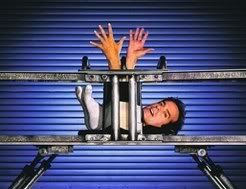
Magic tricks can also bring forth true miracles. The skill and practice required for the perfect sleight of hand are the same set of exercises needed by patients recovering from physical disabilities. This is the heart of Project Magic, a therapy program conceived by illusionist David Copperfield.

http://itricks.com
"Many years ago, I had correspondence with an individual that showed a great amount of self-esteem in his letters. Finally, after many months, I met him at a show and, to my surprise, he was in a wheelchair. And he had never mentioned it to me. Then, I realized he didn’t think of himself as being physically challenged and that his use of magic at home gave him a great amount of self-esteem. From there, I started a program called Project Magic that is in thousands of hospitals in over 30 countries around the world. Magic seems to give patients, from stroke victims to those with physical impairments, a great amount of self-esteem, and it improves manual dexterity. It is a program I am most proud of."

In 1982, he presented the concept to the Daniel Freeman Memorial Hospital.  They liked the idea, so he began developing the program with Julie Dunlap, the assistant director of Occupational Therapy. They created tricks that can help in rehabilitation of patients and got volunteer magicians working with occupational therapists in teaching them.

The magicians also gave a lesson on performance, like how to have the proper stage presence and the art of misdirection.  Soon, they found that the program has an unexpected benefit, performing the tricks gave patients self-confidence and the motivation to work harder.

According to David, "Project Magic is presently employed in hundreds of hospitals throughout the world.  I am pleased to say that the American Occupational Therapist Association has endorsed this program as being an authentic therapeutic tool."

Here's a website that has tricks from Project Magic available for download.  Just click here.  Each trick contains goals and emphasis for Occupational Therapy to aid your session.


Sources:
http://www.tonyko.com/_ProjectMagic/projectmagic.asp
http://www.honestabetradingpost.com/SYM123/ProjectMagic.htm

http://itricks.com/news/2009/04/david-copperfield-talks-about-project-magic-and-reno/

Sabado, Hunyo 19, 2010

what makes a dad

God took the strength of a mountain,
The majesty of a tree,
The warmth of a summer sun,
The calm of a quiet sea,
The generous soul of nature,
The comforting arm of night,
The wisdom of the ages,
The power of the eagle's flight,
The joy of a morning in spring,
The faith of a mustard seed,
The patience of eternity,
The depth of a family need,
Then God combined these qualities,
When there was nothing more to add,
He knew his masterpiece was complete,
And so, he called it
Dad.

~unknown

Biyernes, Hunyo 4, 2010

everybody was kung-fu fighting

In 1849, a strange boy was born in China. His family thought he was a demon; his whole body was covered with hair. Scared of their offspring, his parents left him in a nearby forest. This unfortunate act turned out to be the key to an extraordinary life. A monk discovered the baby and brought him to the Fukien Shaolin Temple.

The monks named him T'ai Djin. Right from the start, the discipline and ideals of the temple was instilled in his young mind. He grew up, devoted to studying each branch of the Shaolin system with Fukien masters. He became an expert of each-- no one at that time has achieved such knowledge. Soon, he earned the title "Su Kong" or Grandmaster.

He became a teacher himself, and passed his wisdom & skills to many others. One of his students became the next grandmaster of Shaolin Do, Ie Chang Ming. He died in 1928 at the age of 79.


Sources:
http://www.usadojo.com/biographies/su-kong-tai-djin.htm
http://thehumanmarvels.com/?p=94
http://www.shaolin-do.com/history.php
http://ymaa.com/forum/viewtopic.php?t=863

Martes, Abril 13, 2010

butterfly alphabet

I'm back!

My first find is Kjell Sandved's Butterfly Alphabet. It's an amazing collection of photos, composed of letters and numbers found on the wings of butterflies and moths.


Kjell, an author and researcher, was trying to put together a new encyclopedia about animals. He
went to the Smithsonian to buy archive photographs but instead found the silver letter, "F", on the wings of an orange Sphinx moth. The moth was in a cuban cigar box, hidden in a corner of an attic in the National Museum of Natural History. He decided to drop his animal encyclopedia project, and chose to capture all letters and numbers on moth and butterfly wings instead.

There was a problem though: “I had hardly clicked a camera before,” Kjell relates, “and knew nothing about photography.” So he studied, and it took him two years to learn still and movie photography. During this time, he and a friend created customized electronic gear from scraps found in a nearby WWII Navy Yard surplus.

In his quest to find the letters and numbers, he travelled to the forests of the Amazon, the Congo, Papua New Guinea and the Philippines. He survived malaria, snakebite, leeches, numerous jungle ants and rabid dog bites. The easiest letters to find were O, C, D, I, L and M. This is because according to him, "Design elements in nature, tend to go toward symmetry." Asymmetrical letters, like B, H, K, Q, T and X required more time. His biggest challenge is the letter G. He found it on the wing of the Catagramma butterfly. It took him 24 years to complete the collection.

The discovery was featured in the then new Smithsonian magazine. They created posters and slogans for Queen Elizabeth II and Emperor Hirohito during their visits to the institution. It also boosted interest in butterfly gardening and rearing. Today, the poster is also used by some as a tool in teaching the alphabet to children.

Kjell found letters and numbers in other plants and animals as well. Here's a leaf in the shape of the letter F. He found this near a fisherman's hut in Fiji. See the others here.


He says modern man has lost his ability to appreciate the small things in nature. He's worried this is already happening to children. "They have so little access to real things because they're taken away from the land. In the cities, with only concrete and steel, it's worst." Through his butterfly alphabet, a child can learn to read and at the same time, appreciate the incredible beauty of nature.

That is something that never fails to amaze Kjell, even with his decades of experience. There is a line from Roethke printed in his posters: "All finite things reveal infinitude."

"This is one of the deepest statements I can think of that has ever been uttered in science and life," he says. "The more I learn, the more I see that I'm totally ignorant." Our brains, according to him, are like boxes, it can be hard to think outside of what we are comfortable with. So instead of trying to figure it all out, he just watches in amazement. He chases and captures all the world's wonders in his photographs.

Sources:
http://www.sciencenewsforkids.org/articles/20051116/Feature1.asp
http://www.butterflyalphabet.com/story/index.php
http://en.wikipedia.org/wiki/Butterfly_Alphabet
http://en.wikipedia.org/wiki/Kjell_B._Sandved
http://www.webcitation.org/5XnAYXRQ7

Miyerkules, Marso 31, 2010

graduation speeches: marc lewis, ph.d.


Too bad I wasn't able to find a video for today's speech, I think it would've been great to watch the speaker.  I'll just post his picture here for your reference. Just like Steve Jobs' address, this one is packed with stories and advice. I think stories, even simple ones, are really powerful when we want to send a message to people-- like how Jesus used parables to preach, or how Rizal's novels contributed to the revolution. It hooks people in, makes them think and if it's really good, changes them forever.

A bit of background on our speaker:  He received his Ph.D. from the University of Cincinnati in Clinical Psychology. He is associate professor of Clinical psychology. His research is the interface of molecular biology and  epidemiology with emphasis on the molecular biology of aging.

Psychology Commencement Address
Marc. S. Lewis, Ph.D.
May 19, 2000

I want to tell you three true stories this evening. Together they make a point that I consider one of the great secrets of life and I hope you’ll remember these stories, because I promise you that you’ll need them at some time or another. The first story is called "the First Tightrope Walker."

Story 1: The First Tightrope Walker

In 1859 the Great Blondin -- the man who invented the high wire act, announced to the world that he intended to cross Niagara Falls on a tightrope. Five thousand people including the Prince of Wales gathered to watch. Halfway across, Blondin suddenly stopped, steadied himself, backflipped into the air, landed squarely on the rope then continued safely to the other side. During that year, Blondin crossed the Falls again and again -- once blindfolded, once carrying a stove, once in chains, and once on a bicycle. Just as he was about to begin yet another crossing, this time pushing a wheelbarrow, he turned to the crowd and shouted "who believes that I can cross pushing this wheelbarrow." Every hand in the crowd went up. Blondin pointed at one man.
"Do you believe that I can do it?" he asked.
"Yes, I believe you can," said the man.
"Are you certain?" said Blondin
"Yes," said the man.
"Absolutely certain?"
"Yes, Absolutely certain."
"Thank you" said Blondin, "then sir, get into the wheelbarrow."

Now, you’ve just had a first class education, from a first class university in a first class college, in one of the best psychology departments in the world. Like that man in the crowd, you know a lot of things. But also like that man, there will be times in your life when knowing things won’t matter as much as how scary the situation is -- and when that happens you’ll have to decide whether or not to get into the wheelbarrow. My second story is about how to make that decision. It’s also about an odd event that over the last thirty-eight years of my life came to be known as "the bet."
Story 2: The Bet

There were three of us. Carl, Ben and I grew up on the same street in Cincinnati and we played a lot of games together. One day in 1962 we were playing a game called careers. If you played that game as a child, you remember that you travel around a board like in monopoly, but instead of collecting money and property, you collect stars, hearts and dollar signs which represent fame, happiness and money.

Well, one of us won the game -- I don't remember who-- but I do remember that whoever it was started gloating and an argument followed about who would actually be the most successful in achieving fame, happiness and wealth. The argument ended in "the bet." We agreed to meet 38 years later at noon of leap year day – February 29th in the year 2000. We would each tell our life story and the person who had been most successful, presumably the one who had gathered the most money, stars and hearts, would have the honor of humiliating the two losers by paying for their dinners at the fanciest restaurant in Cincinnati-- The Maisonette-- which also happened to be one of only eleven five-star restaurants in the United States.

Carl, was probably the favorite to win the bet. He was strikingly handsome and very cool. and after we graduated from high school and then college he made a strong start, at least in terms of dollar signs, stars and hearts. He went to New York and rose high in the organized crime world. He owned limousines, mansions and yachts. He was well known around town and often seen in the company or beautiful women. Then one day a freighter carrying a shipload of his smuggled goods ran aground off the coast of the United States. Carl escaped before the coast guard seized the ship but his fortune was wiped out in a single day. For the first time in his life his confidence broke and he returned to Cincinnati and got a job as a TV cameraman. He had always said that he would never live to see age 35 and one Halloween night in 1982 his prophecy was fulfilled. Carl was killed while driving drunk at the age of 34.

Ben, the second participant in the bet, could sell anything to anybody. He started his own advertising agency and in 1982, the same year that Carl died, Ben’s agency had 30 employees and 20 million dollars in billing. Then one day after years of building the business, Ben realized that he had no life outside of work. He sold his advertising agency, put the money in trust for his kids, and went to India. When he returned he became a teacher in an inner city school but he didn’t do so well in that job and he was fired after the first year. I remember him telling me how interesting it was to have failed. It was the first time that he had failed at anything, but he was far from crushed. Rather, he was fascinated with the idea. Ben went through another half-dozen jobs, all of them successful as he gradually learned how to combine his sales ability with his desire to help others. He is now a team building consultant and troubleshooter for large corporations. He's called in when there's a communications problem and he shows people how to work together. And incidentally he makes several thousand dollars a day for doing so.

Me--I went into teaching. I have to tell you that not once in 38 years did I think that I would lose the bet. Not because I thought my success greater than Ben's or Carl's, but because I couldn't imagine anybody feeling more fulfilled than I felt. There is an inexpressible joy that comes, standing in front of a large class and knowing that the next thing you are going to say will change their way of looking at the world forever. I had that joy and I didn't see how Ben or Carl could match it.

For thirty-eight years, whenever anyone got a raise, or a new job or got married or divorced or broke a limb we recalculated their standing in the bet. Everybody had a chance to win. We all had interesting lives, we all experienced the best and worst that life offers. We all travelled to far places, lived under extraordinary conditions, and weathered grave dangers. We all got married, we all got divorced, we all remarried. We all had babies. We all became incredibly rich, we all went dead broke. We all did all of those things but not in the same order, and that kept things interesting. So much so that when Ben jumped out of an airplane on his fortieth birthday, I jumped with him just in case we later decided that that kind of thing mattered. Don't misunderstand me. None of us particularly cared about wining the bet, but we cared mightily about not losing.

As leap year day 2000 approached, Ben and I realized that neither of us knew how to judge who had been most successful. We knew what we had meant by success when we had played that careers game so many years before but we no longer thought that the board game reflected reality. I can't tell you how much of a shock that realization created. When we first started on the road to success it seemed that the only problem was how to get from here to there. Only after we had gone 38 years down that road did we realize that the goal had changed.

That was the nicest part of the bet. I am sure that even without the bet at some point in our lives we would have sat down and assessed whether or not we had been successful. But I am also sure that if we had not made the bet, and if we had not had had to come up with the criteria for deciding it, we never would have discovered how the meaning of "success" had changed for us over the years.

Last February 29th, Ben and I met at our old high school to decide the bet. A few months earlier, we had asked the English honors class there to help us and they had posed to us a series of essay questions about success. We had sent our answers the month before. Now they questioned us about our answers in person – in what I called the "swimsuit contest." Along the way, we had also acquired newspaper, television and magazine reporters – why I’m not sure, but I presume that it’s because of the billions of childhood bets that get made, we were the only two who were competitive enough to keep ours going for a lifetime. Winning or losing had always included lifetime gloating rights, but with the press on hand there was the potential for national humiliation.

The biggest surprise of the meeting with the students was the discovery that in our lives Ben and I had both learned the same central thing about success, and what we had learned had nothing to do with fame or money or happiness. It had to do with fear. Both of us had learned that on occasion, life will look you in the eye and say "get into the wheelbarrow." At that moment, all of your knowledge won't matter. All that will matter is how badly you need to get to the other side of the tightrope and how much you are afraid of falling.

Ben faced a wheelbarrow when he quit his business. He climbed in and with no money, started a new life. I got into my wheelbarrow about ten years ago on a lonely road in India when I broke my leg hundreds of miles from help. In the two weeks that it took to get to medical care, I learned things about survival that professors don’t often get to learn. Carl faced his wheelbarrow when he lost everything. Maybe he would have climbed in after a time, but we’ll never know – As they say in the jungle "sometimes a bird falls out of the nest." That’s what happened to Carl.

Why did Carl hit bottom and quit while Ben hit bottom, failed in his first job after that, and yet still had enough spirit to be fascinated with the situation rather than crushed? The answer has to do with the nature of success and the secret of life that I mentioned in my introduction. That secret is the subject of this third and last story. So, put away the bet for a moment. I'll and tell you who won after this last story called "The Worst Olympic Ski Jumper Ever.
Story 3: The Worst Olympic Ski Jumper Ever

Eddie "the Eagle" Edwards was Britain's only hope for a medal in ski jumping in the 1988 Olympics in Calgary. On the day of the event, the winner jumped 403 feet. Eddie the Eagle, in a borrowed ski suit and goggles held together with tape, jumped 238 feet. He finished 56th in a field of 56. For a while he was a laughingstock. Television commentators poked fun -- reporters tried to make him look foolish. But Eddie refused to be embarrassed. "This is the best day in my life. I'm representing Britain in the Olympics," he said -- " I just jumped 72 meters through the air -- that's a hard thing to do." Eddie was having a great time. Then somebody noticed that Eddie, was the first Olympic ski jumper that Britain had ever had. He had, by default, stumbled off with the British jumping record. Eddie became the darling of the public.

Eddie got rich over the next few years, giving endorsements. But then things went bad. He lost his money in bad investments, he was barred from the 1992 Olympics and he crashed in a post Olympic jump. "Broke me collarbone, fractured me skull, tore ligaments in me knee, damaged me kidney... And cracked me ribs."

The last I heard of Eddie, he was practicing on a jump simulator in his apartment, more than a thousand miles from the nearest real jump. And what does he say about his brush with glory now that the cameras have turned elsewhere?

"Calgary? Oh, it was brilliant. That was my dream since I was 8. Life since has been great. I've had a wonderful time, been all over the world. Been to lots of interesting places, done lots of interesting things, met lots of interesting people. I wouldn't give that up for the world."

What I learned from the bet, and what I want to tell you tonight, is what Eddie the Eagle seemed to know all along: There are times when you are going to do well, and times when you're going to fail. But neither the doing well, nor the failure is the measure of success. The measure of success is what you think about what you've done. Let me put that another way: The way to be happy is to like yourself and the way to like yourself is to do only things that make you proud

When Ben realized that he was failing, he risked everything to start again. He wasn’t an instant success, but he kept trying. He never declared himself a failure, because he was proud of himself through every effort. When Carl failed as a criminal, he had nothing to be proud of. He wasn’t proud of his life. He had to rely on the world’s opinion of him and the world’s opinion was that he was a failure.

The way to be happy is to like yourself. That’s the real reason not to lie or cheat or turn away in fear. There’s that old joke, not very funny, that goes "no matter where you go, there you are." That’s true. The person who you’re with most in life is yourself and if you don’t like yourself you’re always with somebody you don’t like.

When Ben and I finally went to the Maisonette to settle the bet with a 4 hour, 12 course, multi-vintage wine dinner, we split the $600 tab. If you take that to mean that the outcome was a tie then I haven't made my point. The fact is, that along with our final definition of success came the understanding that both of us had won. So by the rules of the bet we were each bound to pay for the other's dinner.

Ok, here’s the part of the talk that will be on the test: There are
many people around you today who have great hopes for your future. I myself, have three hopes for you:

First, there is going to come a time in your life when in order to
succeed you will have to trust -- when you will have to make a big leap of faith -- and when that time comes I hope you will swallow your fear and get into the wheelbarrow.

Second, whatever strong belief you now hold about what it means to be successful, I hope you will stay open to the possibility that you’ve got it all wrong and graciously accept your new awareness when it comes, with gratitude and humility.

And third, my dear friends, I hope you'll always be like Eddie the
Eagle and only do things that make you proud so that you can truly be your own hero.

Well that's pretty much all I have to tell you. Go get started on all of the successes and failures and all of the other great things that you will do in your life. But when, in the course of some business or social ski jump, you come in dead last, remember to smile for the cameras -- And be sure along the way to become so proud of yourself that when the cameras turn to away you can go home alone and say to yourself. "Oh it was brilliant."

Sources:
http://www.psy.utexas.edu/psy/FACULTY/Lewis/Lewis.html
http://homepage.psy.utexas.edu/homepage/admin/Grad/lewis.html

Biyernes, Marso 26, 2010

graduation speeches: steve jobs

I remember reading this speech right after I finished watching Pirates of Silicon Valley. I was on the net, hungry for more stories and trivias about Steve Jobs, Bill Gates and everyone in it. Then I came across this, and I'm really glad I did. I love the anecdotes and advices he gave. I've also read the one from Bill Gates and I think it's good too, but I like this one better because it's easy to read and it held my attention all the way to the end.


Commencement Address to the Stanford Class of 2005
by Steve Jobs


I am honored to be with you today at your commencement from one of the finest universities in the world. I never graduated from college. Truth be told, this is the closest I've ever gotten to a college graduation. Today I want to tell you three stories from my life. That's it. No big deal. Just three stories.

The first story is about connecting the dots.

I dropped out of Reed College after the first 6 months, but then stayed around as a drop-in for another 18 months or so before I really quit. So why did I drop out?

It started before I was born. My biological mother was a young, unwed college graduate student, and she decided to put me up for adoption. She felt very strongly that I should be adopted by college graduates, so everything was all set for me to be adopted at birth by a lawyer and his wife. Except that when I popped out they decided at the last minute that they really wanted a girl. So my parents, who were on a waiting list, got a call in the middle of the night asking: "We have an unexpected baby boy; do you want him?" They said: "Of course." My biological mother later found out that my mother had never graduated from college and that my father had never graduated from high school. She refused to sign the final adoption papers. She only relented a few months later when my parents promised that I would someday go to college.

And 17 years later I did go to college. But I naively chose a college that was almost as expensive as Stanford, and all of my working-class parents' savings were being spent on my college tuition. After six months, I couldn't see the value in it. I had no idea what I wanted to do with my life and no idea how college was going to help me figure it out. And here I was spending all of the money my parents had saved their entire life. So I decided to drop out and trust that it would all work out OK. It was pretty scary at the time, but looking back it was one of the best decisions I ever made. The minute I dropped out I could stop taking the required classes that didn't interest me, and begin dropping in on the ones that looked interesting.

It wasn't all romantic. I didn't have a dorm room, so I slept on the floor in friends' rooms, I returned coke bottles for the 5¢ deposits to buy food with, and I would walk the 7 miles across town every Sunday night to get one good meal a week at the Hare Krishna temple. I loved it. And much of what I stumbled into by following my curiosity and intuition turned out to be priceless later on. Let me give you one example:

Reed College at that time offered perhaps the best calligraphy instruction in the country. Throughout the campus every poster, every label on every drawer, was beautifully hand calligraphed. Because I had dropped out and didn't have to take the normal classes, I decided to take a calligraphy class to learn how to do this. I learned about serif and san serif typefaces, about varying the amount of space between different letter combinations, about what makes great typography great. It was beautiful, historical, artistically subtle in a way that science can't capture, and I found it fascinating.

None of this had even a hope of any practical application in my life. But ten years later, when we were designing the first Macintosh computer, it all came back to me. And we designed it all into the Mac. It was the first computer with beautiful typography. If I had never dropped in on that single course in college, the Mac would have never had multiple typefaces or proportionally spaced fonts. And since Windows just copied the Mac, its likely that no personal computer would have them. If I had never dropped out, I would have never dropped in on this calligraphy class, and personal computers might not have the wonderful typography that they do. Of course it was impossible to connect the dots looking forward when I was in college. But it was very, very clear looking backwards ten years later.

Again, you can't connect the dots looking forward; you can only connect them looking backwards. So you have to trust that the dots will somehow connect in your future. You have to trust in something — your gut, destiny, life, karma, whatever. This approach has never let me down, and it has made all the difference in my life.

My second story is about love and loss.

I was lucky — I found what I loved to do early in life. Woz and I started Apple in my parents garage when I was 20. We worked hard, and in 10 years Apple had grown from just the two of us in a garage into a $2 billion company with over 4000 employees. We had just released our finest creation — the Macintosh — a year earlier, and I had just turned 30. And then I got fired. How can you get fired from a company you started? Well, as Apple grew we hired someone who I thought was very talented to run the company with me, and for the first year or so things went well. But then our visions of the future began to diverge and eventually we had a falling out. When we did, our Board of Directors sided with him. So at 30 I was out. And very publicly out. What had been the focus of my entire adult life was gone, and it was devastating.

I really didn't know what to do for a few months. I felt that I had let the previous generation of entrepreneurs down - that I had dropped the baton as it was being passed to me. I met with David Packard and Bob Noyce and tried to apologize for screwing up so badly. I was a very public failure, and I even thought about running away from the valley. But something slowly began to dawn on me — I still loved what I did. The turn of events at Apple had not changed that one bit. I had been rejected, but I was still in love. And so I decided to start over.

I didn't see it then, but it turned out that getting fired from Apple was the best thing that could have ever happened to me. The heaviness of being successful was replaced by the lightness of being a beginner again, less sure about everything. It freed me to enter one of the most creative periods of my life.

During the next five years, I started a company named NeXT, another company named Pixar, and fell in love with an amazing woman who would become my wife. Pixar went on to create the worlds first computer animated feature film, Toy Story, and is now the most successful animation studio in the world. In a remarkable turn of events, Apple bought NeXT, I returned to Apple, and the technology we developed at NeXT is at the heart of Apple's current renaissance. And Laurene and I have a wonderful family together.

I'm pretty sure none of this would have happened if I hadn't been fired from Apple. It was awful tasting medicine, but I guess the patient needed it. Sometimes life hits you in the head with a brick. Don't lose faith. I'm convinced that the only thing that kept me going was that I loved what I did. You've got to find what you love. And that is as true for your work as it is for your lovers. Your work is going to fill a large part of your life, and the only way to be truly satisfied is to do what you believe is great work. And the only way to do great work is to love what you do. If you haven't found it yet, keep looking. Don't settle. As with all matters of the heart, you'll know when you find it. And, like any great relationship, it just gets better and better as the years roll on. So keep looking until you find it. Don't settle.

My third story is about death.

When I was 17, I read a quote that went something like: "If you live each day as if it was your last, someday you'll most certainly be right." It made an impression on me, and since then, for the past 33 years, I have looked in the mirror every morning and asked myself: "If today were the last day of my life, would I want to do what I am about to do today?" And whenever the answer has been "No" for too many days in a row, I know I need to change something.

Remembering that I'll be dead soon is the most important tool I've ever encountered to help me make the big choices in life. Because almost everything — all external expectations, all pride, all fear of embarrassment or failure - these things just fall away in the face of death, leaving only what is truly important. Remembering that you are going to die is the best way I know to avoid the trap of thinking you have something to lose. You are already naked. There is no reason not to follow your heart.

About a year ago I was diagnosed with cancer. I had a scan at 7:30 in the morning, and it clearly showed a tumor on my pancreas. I didn't even know what a pancreas was. The doctors told me this was almost certainly a type of cancer that is incurable, and that I should expect to live no longer than three to six months. My doctor advised me to go home and get my affairs in order, which is doctor's code for prepare to die. It means to try to tell your kids everything you thought you'd have the next 10 years to tell them in just a few months. It means to make sure everything is buttoned up so that it will be as easy as possible for your family. It means to say your goodbyes.

I lived with that diagnosis all day. Later that evening I had a biopsy, where they stuck an endoscope down my throat, through my stomach and into my intestines, put a needle into my pancreas and got a few cells from the tumor. I was sedated, but my wife, who was there, told me that when they viewed the cells under a microscope the doctors started crying because it turned out to be a very rare form of pancreatic cancer that is curable with surgery. I had the surgery and I'm fine now.

This was the closest I've been to facing death, and I hope its the closest I get for a few more decades. Having lived through it, I can now say this to you with a bit more certainty than when death was a useful but purely intellectual concept:

No one wants to die. Even people who want to go to heaven don't want to die to get there. And yet death is the destination we all share. No one has ever escaped it. And that is as it should be, because Death is very likely the single best invention of Life. It is Life's change agent. It clears out the old to make way for the new. Right now the new is you, but someday not too long from now, you will gradually become the old and be cleared away. Sorry to be so dramatic, but it is quite true.

Your time is limited, so don't waste it living someone else's life. Don't be trapped by dogma — which is living with the results of other people's thinking. Don't let the noise of others' opinions drown out your own inner voice. And most important, have the courage to follow your heart and intuition. They somehow already know what you truly want to become. Everything else is secondary.

When I was young, there was an amazing publication called The Whole Earth Catalog, which was one of the bibles of my generation. It was created by a fellow named Stewart Brand not far from here in Menlo Park, and he brought it to life with his poetic touch. This was in the late 1960's, before personal computers and desktop publishing, so it was all made with typewriters, scissors, and polaroid cameras. It was sort of like Google in paperback form, 35 years before Google came along: it was idealistic, and overflowing with neat tools and great notions.

Stewart and his team put out several issues of The Whole Earth Catalog, and then when it had run its course, they put out a final issue. It was the mid-1970s, and I was your age. On the back cover of their final issue was a photograph of an early morning country road, the kind you might find yourself hitchhiking on if you were so adventurous. Beneath it were the words: "Stay Hungry. Stay Foolish." It was their farewell message as they signed off. Stay Hungry. Stay Foolish. And I have always wished that for myself. And now, as you graduate to begin anew, I wish that for you.

Stay Hungry. Stay Foolish.

Thank you all very much.

Sources:
http://news-service.stanford.edu/news/2005/june15/jobs-061505.html

http://www.youtube.com/watch?v=D1R-jKKp3NA

Martes, Marso 23, 2010

graduation speeches: conan o'brien

March is graduation season here in the Philippines, so in my coming entries, I'll be posting some inspiring commencement speeches from popular personalities.

Today we have Conan O'Brien. A bit of a background (though I'm sure everyone knows who he is). He graduated from Harvard, major in History; he wrote for Saturday Night Live and The Simpsons and then served as a host of Late Night with Conan O'Brien.

This is the speech he gave for the Harvard Class of 2000.


Commencement Speech to the Harvard Class of 2000
by Conan O'Brien


I'd like to thank the Class Marshals for inviting me here today. The last time I was invited to Harvard it cost me $110,000, so you'll forgive me if I'm a bit suspicious. I'd like to announce up front that I have one goal this afternoon: to be half as funny as tomorrow's Commencement Speaker, Moral Philosopher and Economist, Amartya Sen. Must get more laughs than seminal wage/price theoretician.

Students of the Harvard Class of 2000, fifteen years ago I sat where you sit now and I thought exactly what you are now thinking: What's going to happen to me? Will I find my place in the world? Am I really graduating a virgin? I still have 24 hours and my roommate's Mom is hot. I swear she was checking me out. Being here today is very special for me. I miss this place. I especially miss Harvard Square - it's so unique. No where else in the world will you find a man with a turban wearing a Red Sox jacket and working in a lesbian bookstore. Hey, I'm just glad my dad's working.

It's particularly sweet for me to be here today because when I graduated, I wanted very badly to be a Class Day Speaker. Unfortunately, my speech was rejected. So, if you'll indulge me, I'd like to read a portion of that speech from fifteen years ago: "Fellow students, as we sit here today listening to that classic Ah-ha tune which will definitely stand the test of time, I would like to make several predictions about what the future will hold: "I believe that one day a simple Governor from a small Southern state will rise to the highest office in the land. He will lack political skill, but will lead on the sheer strength of his moral authority." "I believe that Justice will prevail and, one day, the Berlin Wall will crumble, uniting East and West Berlin forever under Communist rule." "I believe that one day, a high speed network of interconnected computers will spring up world-wide, so enriching people that they will lose their interest in idle chit chat and pornography." "And finally, I believe that one day I will have a television show on a major network, seen by millions of people a night, which I will use to re-enact crimes and help catch at-large criminals." And then there's some stuff about the death of Wall Street which I don't think we need to get into....

The point is that, although you see me as a celebrity, a member of the cultural elite, a kind of demigod, I was actually a student here once much like you. I came here in the fall of 1981 and lived in Holworthy. I was, without exaggeration, the ugliest picture in the Freshman Face book. When Harvard asked me for a picture the previous summer, I thought it was just for their records, so I literally jogged in the August heat to a passport photo office and sat for a morgue photo. To make matters worse, when the Face Book came out they put my picture next to Catherine Oxenberg, a stunning blonde actress who was accepted to the class of '85 but decided to defer admission so she could join the cast of "Dynasty." My photo would have looked bad on any page, but next to Catherine Oxenberg, I looked like a mackerel that had been in a car accident. You see, in those days I was six feet four inches tall and I weighed 150 pounds. Recently, I had some structural engineers run those numbers into a computer model and, according to the computer, I collapsed in 1987, killing hundreds in Taiwan.

-=-=-=-=-=-=-


After freshman year I moved to Mather House. Mather House, incidentally, was designed by the same firm that built Hitler's bunker. In fact, if Hitler had conducted the war from Mather House, he'd have shot himself a year earlier. 1985 seems like a long time ago now. When I had my Class Day, you students would have been seven years old. Seven years old. Do you know what that means? Back then I could have beaten any of you in a fight. And I mean bad. It would be no contest. If any one here has a time machine, seriously, let's get it on, I will whip your seven year old butt. When I was here, they sold diapers at the Coop that said "Harvard Class of 2000." At the time, it was kind of a joke, but now I realize you wore those diapers. How embarrassing for you. A lot has happened in fifteen years. When you think about it, we come from completely different worlds. When I graduated, we watched movies starring Tom Cruise and listened to music by Madonna. I come from a time when we huddled around our TV sets and watched "The Cosby Show" on NBC, never imagining that there would one day be a show called "Cosby" on CBS. In 1985 we drove cars with driver's side airbags, but if you told us that one day there'd be passenger side airbags, we'd have burned you for witchcraft.

But of course, I think there is some common ground between us. I remember well the great uncertainty of this day. Many of you are justifiably nervous about leaving the safe, comfortable world of Harvard Yard and hurling yourself headlong into the cold, harsh world of Harvard Grad School, a plum job at your father's firm, or a year abroad with a gold Amex card and then a plum job in your father's firm. But let me assure you that the knowledge you've gained here at Harvard is a precious gift that will never leave you. Take it from me, your education is yours to keep forever. Why, many of you have read the Merchant of Florence, and that will inspire you when you travel to the island of Spain. Your knowledge of that problem they had with those people in Russia, or that guy in South America-you know, that guy-will enrich you for the rest of your life.

-=-=-=-=-=-=-


There is also sadness today, a feeling of loss that you're leaving Harvard forever. Well, let me assure you that you never really leave Harvard. The Harvard Fundraising Committee will be on your *** until the day you die. Right now, a member of the Alumni Association is at the Mt. Auburn Cemetery shaking down the corpse of Henry Adams. They heard he had a brass toe ring and they aims to get it. Imagine: These people just raised 2.5 billion dollars and they only got through the B's in the alumni directory. Here's how it works. Your phone rings, usually after a big meal when you're tired and most vulnerable. A voice asks you for money. Knowing they just raised 2.5 billion dollars you ask, "What do you need it for?" Then there's a long pause and the voice on the other end of the line says, "We don't need it, we just want it." It's chilling.

What else can you expect? Let me see, by your applause, who here wrote a thesis. (APPLAUSE) A lot of hard work, a lot of your blood went into that thesis... and no one is ever going to care. I wrote a thesis: Literary Progeria in the works of Flannery O'Connor and William Faulkner. Let's just say that, during my discussions with Pauly Shore, it doesn't come up much. For three years after graduation I kept my thesis in the glove compartment of my car so I could show it to a policeman in case I was pulled over. (ACT OUT) License, registration, cultural exploration of the Man Child in the Sound and the Fury...

So what can you expect out there in the real world? Let me tell you. As you leave these gates and re-enter society, one thing is certain: Everyone out there is going to hate you. Never tell anyone in a roadside diner that you went to Harvard. In most situations the correct response to where did you to school is, "School? Why, I never had much in the way of book larnin' and such." Then, get in your BMW and get the hell out of there.

You see, you're in for a lifetime of "And you went to Harvard?" Accidentally give the wrong amount of change in a transaction and it's, "And you went to Harvard?" Ask the guy at the hardware store how these jumper cables work and hear, "And you went to Harvard?" Forget just once that your underwear goes inside your pants and it's "and you went to Harvard." Get your head stuck in your niece's dollhouse because you wanted to see what it was like to be a giant and it's "Uncle Conan, you went to Harvard!?"

But to really know what's in store for you after Harvard, I have to tell you what happened to me after graduation. I'm going to tell you my story because, first of all, my perspective may give many of you hope, and, secondly, it's an amazing rush to stand in front of six thousand people and talk about yourself.

-=-=-=-=-=-=-


After graduating in May, I moved to Los Angeles and got a three week contract at a small cable show. I got a $380 a month apartment and bought a 1977 Isuzu Opel, a car Isuzu only manufactured for a year because they found out that, technically, it's not a car. Here's a quick tip, graduates: no four cylinder vehicle should have a racing stripe. I worked at that show for over a year, feeling pretty good about myself, when one day they told me they were letting me go. I was fired and, I hadn't saved a lot of money. I tried to get another job in television but I couldn't find one.

So, with nowhere else to turn, I went to a temp agency and filled out a questionnaire. I made damn sure they knew I had been to Harvard and that I expected the very best treatment. And so, the next day, I was sent to the Santa Monica branch of Wilson's House of Suede and Leather. When you have a Harvard degree and you're working at Wilson's House of Suede and Leather, you are haunted by the ghostly images of your classmates who chose Graduate School. You see their faces everywhere: in coffee cups, in fish tanks, and they're always laughing at you as you stack suede shirts no man, in good conscience, would ever wear. I tried a lot of things during this period: acting in corporate infomercials, serving drinks in a non-equity theatre, I even took a job entertaining at a seven year olds' birthday party. In desperate need of work, I put together some sketches and scored a job at the fledgling Fox Network as a writer and performer for a new show called "The Wilton North Report." I was finally on a network and really excited. The producer told me the show was going to revolutionize television. And, in a way, it did. The show was so hated and did so badly that when, four weeks later, news of its cancellation was announced to the Fox affiliates, they burst into applause.

Eventually, though, I got a huge break. I had submitted, along with my writing partner, a batch of sketches to Saturday Night Live and, after a year and a half, they read it and gave us a two week tryout. The two weeks turned into two seasons and I felt successful. Successful enough to write a TV pilot for an original sitcom and, when the network decided to make it, I left Saturday Night Live. This TV show was going to be groundbreaking. It was going to resurrect the career of TV's Batman, Adam West. It was going to be a comedy without a laugh track or a studio audience. It was going to change all the rules. And here's what happened: When the pilot aired it was the second lowest-rated television show of all time. It's tied with a test pattern they show in Nova Scotia.

-=-=-=-=-=-=-


So, I was 28 and, once again, I had no job. I had good writing credits in New York, but I was filled with disappointment and didn't know what to do next. I started smelling suede on my fingertips. And that's when The Simpsons saved me. I got a job there and started writing episodes about Springfield getting a Monorail and Homer going to College. I was finally putting my Harvard education to good use, writing dialogue for a man who's so stupid that in one episode he forgot to make his own heart beat. Life was good.

And then, an insane, inexplicable opportunity came my way . A chance to audition for host of the new Late Night Show. I took the opportunity seriously but, at the same time, I had the relaxed confidence of someone who knew he had no real shot. I couldn't fear losing a great job I had never had. And, I think that attitude made the difference. I'll never forget being in the Simpson's recording basement that morning when the phone rang. It was for me. My car was blocking a fire lane. But a week later I got another call: I got the job.

So, this was undeniably the it: the truly life-altering break I had always dreamed of. And, I went to work. I gathered all my funny friends and poured all my years of comedy experience into building that show over the summer, gathering the talent and figuring out the sensibility. We debuted on September 13, 1993 and I was happy with our effort. I felt like I had seized the moment and put my very best foot forward. And this is what the most respected and widely read television critic, Tom Shales, wrote in the Washington Post: "O'Brien is a living collage of annoying nervous habits. He giggles and titters, jiggles about and fiddles with his cuffs. He had dark, beady little eyes like a rabbit. He's one of the whitest white men ever. O'Brien is a switch on the guest who won't leave: he's the host who should never have come. Let the Late show with Conan O'Brien become the late, Late Show and may the host return to Conan O'Blivion whence he came." There's more but it gets kind of mean.

Needless to say, I took a lot of criticism, some of it deserved, some of it excessive. And it hurt like you wouldn't believe. But I'm telling you all this for a reason. I've had a lot of success and I've had a lot of failure. I've looked good and I've looked bad. I've been praised and I've been criticized. But my mistakes have been necessary. Except for Wilson's House of Suede and Leather. That was just stupid.

-=-=-=-=-=-=-


I've dwelled on my failures today because, as graduates of Harvard, your biggest liability is your need to succeed. Your need to always find yourself on the sweet side of the bell curve. Because success is a lot like a bright, white tuxedo. You feel terrific when you get it, but then you're desperately afraid of getting it dirty, of spoiling it in any way.

I left the cocoon of Harvard, I left the cocoon of Saturday Night Live, I left the cocoon of The Simpsons. And each time it was bruising and tumultuous. And yet, every failure was freeing, and today I'm as nostalgic for the bad as I am for the good.

So, that's what I wish for all of you: the bad as well as the good. Fall down, make a mess, break something occasionally. And remember that the story is never over. If it's all right, I'd like to read a little something from just this year: "Somehow, Conan O'Brien has transformed himself into the brightest star in the Late Night firmament. His comedy is the gold standard and Conan himself is not only the quickest and most inventive wit of his generation, but quite possible the greatest host ever."

Ladies and Gentlemen, Class of 2000, I wrote that this morning, as proof that, when all else fails, there's always delusion.

I'll go now, to make bigger mistakes and to embarrass this fine institution even more. But let me leave you with one last thought: If you can laugh at yourself loud and hard every time you fall, people will think you're drunk.

Thank you.

Sources:
http://www.allowe.com/Humor/book/COBspeech2k.htm
http://www.youtube.com/watch?v=QmD4wLp-wTI

Huwebes, Pebrero 11, 2010

a reason, a season or a lifetime‏

People are always coming and going, in and out of everyone's life.  Next week, my father will be coming home.  He's a seaman, working for a Japanese merchant.  He's been gone for, I think, a year or more.  It has always been this way ever since I was a kid and it's a big occasion when he comes home.  My mother's really busy right now, shopping and cleaning the house.  We can't wait to see him.

Some people are going-- six months abroad.  A few friends got onshore assignments and will soon be working with our US counterparts.  We had a little party for them yesterday.  There are also some people that are going-- permanently, leaving the company a few weeks from now. Lunchtime will be a lot quieter when they're all gone.

I remember this email I got a few years back. I don't know who wrote it but l just want to share it with you.


People come into your life for a reason, a season or a lifetime.
When you know which one it is, you will know what to do for that
 person..


When someone is in your life for a REASON, it is usually to meet a need
 you have expressed.

They have come to assist you through a difficulty,
to provide you with 
guidance and support,
t
o aid you physically, emotionally or spiritually.
They may seem like a godsend and they are.
They are there for the reason you need them to be.
Then, without any wrongdoing on your part or at an inconvenient time, 

this person will say or do something to bring the relationship to an
 end.


Sometimes they die.
Sometimes they walk away.
Sometimes they act up and force you to take a stand.
What we must realize is that our need has been met, our desire
 fulfilled, their work is done.
The prayer you sent up has been answered and now it is time to move on.


Some people come into your life for a SEASON,
because your turn has
 come to share, grow or learn.
They bring you an experience of peace or make you laugh.
They may teach you something you have never done.
They usually give you an unbelievable amount of joy.
Believe it, it is real.
But only for a season.


LIFETIME relationships teach you lifetime lessons,
things you must build upon in order to have a solid emotional 
foundation.
Your job is to accept the lesson,
love the person
and put what you have learned to use in all other 
relationships and areas of your life.
It is said that love is blind but friendship is clairvoyant.


Thank you for being a part of my life, 

whether you were a reason, a season or a lifetime.

---<-@

Linggo, Pebrero 7, 2010

have you hugged your foot today?


Derek Redmond
1992 Olympic Games, Barcelona Spain


Derek Redmond is a British athlete who competed in the 400 meters semi-final of the 1992 Olympic Games in Barcelona, Spain. He tore his hamstring in the middle of the race but decided to continue despite the injury. His father rushed to his side to help him. It got Derek officially disqualified, but still, nothing beats finding a strong shoulder to lean and cry on during difficult times. The medical staff tried to stop them but his father waived them off. They were able to complete the full lap together.

Derek is currently a motivational speaker and the Director of Development for sprints and hurdles for UK Athletics.

Sources:

Linggo, Enero 31, 2010

levi & leaf


by walter villa
Out of a single unremarkable leaf came beautiful music.  I remember seeing him on TV back when I was still a kid. Days after that we were trying to do the same thing with Stork candy wrappers. All I was able to play was one single note. It's a lot like whistling but it's hard to get a melody going. Besides it's really embarrassing to have other kids watch you spit all over yourself.

We did try using leaves but they tend to fall apart and we always end up having these bugs in our mouth.  (Amateurs! There goes our chance for the Guinness Book of World Records.)

He composed the lyrics of one of the beautiful, saddest songs I heard.  "Sa Ugoy ng Duyan" is a song of someone longing for his childhood, back when his mother would sing lullabies while gently swaying him to sleep.  I don't know why but I always associate this song to the story of Sisa in Rizal's Noli Me Tangere, a caring mother who lost her mind when her two sons were accused of stealing and were captured by the authorities.

In this age of remakes and rock bands, Levi Celerio's original compositions are diamonds, classics that I hope will never get lost in time.

Levi Celerio
(April 30, 1910 - April 2, 2002)


Miyerkules, Enero 27, 2010

pinatubo

"Pinatubo", means "to make something grow". It's also the name of an active volcano here in the Philippines. It erupted almost two decades ago, July 1991. I remember it was raining and we were watching the news. We looked out the window and everything was covered in ash. We thought it was snow.

About 800 people were killed and thousands more lost their home & livelihood. I think the ones most affected are the Aetas, an indigenous tribe living in the mountains. Up there, they had their own world, standing still and unchanging-- unaffected by what's happening in the country. They've never been under Spanish or American rule. I'm not even sure if they participated in the war. According to WikiPilipinas, "They have adjusted to social, economic, cultural and political pressures by creating systems and structures within their culture to buffer the impact of change."

When the volcano erupted, they were uprooted and forced to come down, relocated to government-organized resettlement areas. Living here is hard, they were given small portions of land but it's not ideal for growing crops. Some found work as farmhands, some as beggars. Most of them are illiterate and uncivilized. Marginalized and discriminated, it's almost impossible to go back to their original way of life.

Today, several support groups, like the EVACF, are helping the Aetas. They teach them entrepreneurship, provide loan assistance and scholarship. You can also help out, click here. Last year, President Arroyo handed out CADTs (Certificates of Ancestral Domain Titles) to 601 Aeta families. Another NGO, Foundation of Our Lady Peace Mission, has another interesting project: the Indigenous Peoples Community Health Workers Development Program, where they train "barefoot doctors" (chosen members of a tribe) on things like proper health education, diagnosis and treatment of common illnesses, parenthood and family planning. These barefoot doctors go back, and serve their community, as well as spread the knowledge to the rest.

Then, last February 2009, a series of children storybooks, written and illustrated by the Aetas and Mangyans (another indigenous tribe) was published.  It tells stories about their past, and their Gods.  They've waited for a very very long time and they still have a long way to go but I think slowly, the Aetas are moving on with life.

No matter how much we resist, change really is inevitable. It will come, whether we're prepared or not. And when it does, it will take something away-- something we love, our belongings, our beliefs or maybe even our way of life. But it doesn't mean we'll be left with nothing, because with change comes the chance to grow. I went to Pinatubo last weekend with some friends and I was amazed at how beautiful it is now-- calm blue water, happy tourists, clear skies with scattered clouds, small plants and trees already covering the mountains and the warm sun shining on us. It's like being inside a painting.


Sources:
http://en.wikipedia.org/wiki/Mount_Pinatubo
http://en.wikipilipinas.org/index.php?title=Aeta
http://www.evacf.org/livelihood.html
http://www.evacf.org/Help.htm
http://newsinfo.inquirer.net/inquirerheadlines/nation/view/20090608-209288/100-tribal-healers-gather-for-summit

http://www.indigenousportal.com/Education/Mangyan-Aeta-folk-write-own-storybooks.html

Miyerkules, Enero 20, 2010

specialisterne


"Did you know that the business community realises a growing need for specialists?
Did you know that people with ASD are natural born specialists?"

Thorkil Sonne's son, Lars, was diagnosed with childhood autism at the age of 3. He was devastated but he also noticed something exceptional with the child. “When he starts focusing on something, he is so clever,” he says. “He can learn so much; it’s quite extraordinary.”

It's a trait common to some individuals with ASD (Autism Spectrum Disorder), especially those with Asperger syndrome-- an obssessive focus on things and a remarkable memory. Thorkil recognized these cognitive strengths and soon an idea came to him. In 2004, he got a loan and founded, Specialisterne, an IT company that provides software testing services and data conversion to businesses in Denmark. It's the kind of work that requires focus and accuracy, a perfect fit for people with ASD.

“I have an ability to see when something deviates,” according to Torben Sorensen, a Specialisterne employee. “It kind of leaps to the eye. It’s an ability many people don’t seem to have, but to me it’s natural.”

They don't get bored and lose their focus on repetitive tasks, they don't do office gossip, they're accurate, punctual and thorough, they live on routine. “I think the thing the supervisors really liked most was their work ethic,” says David Hagner from University of New Hampshire Institute on Disability. “If they’re told, ‘Your break is 10 minutes,’ they would take 10 minutes. Not nine or 11. Just 10.”

Currently, Specialisterne has about 50 to 60 employees and approximately 75% are diagnosed with ASD. They do work for companies like Microsoft, CSC, Oracle and Lego. There are plans for expansion and their long term goal is to employ a thousand employees with ASDs worldwide.

Sources:
http://aspieministry.wordpress.com
http://autism.wikia.com/wiki/Narrow_interests
http://www2.macleans.ca/2009/06/04/channelling-autism/
http://www.mnn.com/technology/research-innovations/stories/autism-deemed-an-asset-for-some-jobs
http://en.wikipedia.org/wiki/Specialisterne