Ipinapakita ang mga post na may etiketa na History. Ipakita ang lahat ng mga post

Sabado, Pebrero 26, 2011

revolution


Years ago, I didn't think anything would happen when I joined some outreach activities. I just wanted to get out there and help. Then, I told some friends about it and sent them an email with the details. They weren't really into it. So I thought, well that's that. But I didn't know that the word had spread. Now, I see posts in facebook from co-workers that I didn't really know that well, inviting people to the same outreach I joined years ago.

Another friend thanked me when I invited her to join a training seminar I attended for special kids. She said she was planning to do that full-time in the future and the seminar will be her starting point. I'm so happy to know that others are also getting involved.

You may think that what you're doing doesn't influence anyone but it does. Last Friday, we celebrated the 25th anniversary of the EDSA Revolution. It was also last Friday when angry protests calling for change swept Middle East. Both of these revolutions started from small seeds, and it grew and grew and grew, until it became a revolution. From one simple act, like Rosa Parks saying "I ain't movin" and refusing to give up her seat for a white passenger, you can make change happen. Even if it's small, it will ripple out. It's a start.

Lunes, Enero 31, 2011

rescuing art


When World War II ended, a group of men and women began hunting for works of art inside salt mines, caves and castles. They found more than 6,500 pieces in a salt mine near Salzburg, including Da Vinci’s “Lady with an Ermine”. In another German mine, they uncovered a Rembrandt self-portrait, along with others hidden there by the museums. The atmosphere in these caves, cool temperatures and moisture in the air, helped in preserving the paintings. It also protected them against the war, the bombs, the Nazis and the looting.

Who are these people so committed to saving our art?

They.. are the Monuments Men..   (superhero entrance music plays)

Kidding aside, these people are real life heroes that played a crucial role during WWII. They hid art, sometimes even moved it to different places, and risked their lives in doing so. Here's an excerpt from monumentsmen.com:


The “Monuments Men”, were a group of approximately 345 men and women from thirteen nations who comprised the MFAA section during World War II. Many were museum directors, curators, art historians, artists, architects, and educators. Together they worked to protect monuments and other cultural treasures from the destruction of World War II. In the last year of the war, they tracked, located, and in the years that followed returned more than five million artistic and cultural items stolen by Hitler and the Nazis. Their role in preserving cultural treasures was without precedent.

Today, like the art they protected and found, there is an ongoing quest for the stories of their lives.  The Monuments Men Foundation is now in its fifth year of research for their bios.  Some are already complete, some only with pictures, while others are still just a name.  Click here to help out.  Who knows, maybe you'll find you knew one of them all along.

Sources:
http://www.monumentsmenfoundation.org
http://www.popmatters.com/pm/article/little-known-monuments-men-hunted-art-treasures-stolen-by-nazis/
http://www.wikipedia.com

Huwebes, Setyembre 30, 2010

fossils found

Last week, a construction crew from Southern California Edison, accidentally unearthed a collection of fossils dating 1.4 million years back. They were drilling in San Timoteo Canyon to build a new substation.

"If you step back, this is just a huge find," says Rick Greenwood, a director in SCE. "Some of the things I personally find fascinating are the prehistoric camels and llamas and horses and deer. I don't think most people even have the concept that those types of animals were roaming around here more than a million years ago."

They also found a rich assortment of plant life like birch, pine and sycamore, indicating that the area used to be a marsh land, which probably preserved the fossils well. Aside from the animals mentioned, they also found bones of a ground sloth, an ancestor of the saber-toothed tiger, frogs, salamanders and rodents. Scientists are still examining the fragments but its possible that some of the bones may even belong to some new species we didn't know existed.

According to Tom Demere, a paleontologist from the San Diego Museum of Natural History, the fossils could provide a more comprehensive view of what it was like in Southern Cali a million years ago.

"We have a fuzzy view of what this time period was like in terms of mammal evolution," Demere said. "A discovery like this - when they're all found together and in a whole range of sizes - could really be an important contribution."

Some of the bones will be displayed in Western Science Center in Hemet. Scientists and researchers can also be granted access to the collection.

Sources:
http://news.yahoo.com/s/ap/20100921/ap_on_bi_ge/us_fossil_find
http://www.latimes.com/news/science/la-sci-fossils-20100921,0,3128425.story
http://www.thestate.com/2010/09/20/1475249/calif-utility-stumbles-on-14m.html
http://www.pe.com/localnews/inland/stories/PE_News_Local_D_fossils21.2bc5f26.html

Lunes, Hunyo 14, 2010

flags

Last Saturday, June 12, was our country's Independence Day. I wasn't able to watch the festivities but there's one surprise I did enjoy: the free rides given to commuters by the MRT and LRT!

I had to go to several places that day so it was a big help to me. Everywhere I went they had the flag displayed. Interesting fact: Because of its design, only the Philippine flag, when raised upside down (red over blue stripe), can function as a distress signal or an indication that we're in a state of war.

Flags are fascinating. There's so much history and meaning behind them.  Take the flag of Mozambique, the only one in the world that features a modern weapon, an AK-47.It represents defense and vigilance, which is possibly a reflection of the 15-year civil war in the country that started in 1977 and ended in 1992.

The one flag that intrigues me is Nepal's. I read that the reason for its shape is because it symbolizes the Himalaya Mountains and a Pagoda-- put a mirror next to it and you'll see.

When I was in school, we celebrated United Nations Day by creating flags, one country per class, one flag per student. Afterwards, we displayed them outside the classroom. I remember wishing that we'd get Japan or Libya so it would be easy to make, just get a green art paper and that's it!  Now, I know that the reason behind the color green is Libya's devotion to Islam, which has green as its traditional color.

 Japan's red disc is the sun, a common Japanese symbol that started during the time of daimyos and samurais, and it is also believed that the imperial throne originated from Amaterasu, the sun goddess.

Happy Independence Day everyone!

Sources:
http://en.wikipedia.org/

Sabado, Mayo 29, 2010

Treasure Trove: life, liberty and the pursuit of happiness


the Find
An original 1776 print of the American Declaration of Independence

the Lucky
An unidentified financial analyst from Philadelphia

the Place and the Time
A flea market in Adamstown, Pennsylvania. 1989.

How in the world!?
The document was folded inside an old painting, between the canvas and wood backing. The buyer bought the painting for $4, because he liked the frame. When he tried to remove the picture, the frame broke and the rest.. is history.

His discovery is one of the very first 500 copies printed by John Dunlap in 1776. Today, there are only 27 in existence and this one was found to be in good condition. It was auctioned for $2.42 million at Sotheby's.

Sources:
http://www.snopes.com/luck/declare.asp
http://en.wikipedia.org/wiki/Dunlap_broadside

Lunes, Mayo 10, 2010

indelible

After standing in line for three long hours, in a narrow corridor with about fifty people squeezing in, I finally cast my vote.  The precinct cluster and number system was inefficient, people were confused and bitched nonstop, it was hot and humid.  We were like sardines in there.  I couldn't tell from whose pores the sweat came from.  I was so tempted to follow those people who got out and just left.

The only thing that kept me from complaining is the realization that there were others who had worse fate than me.  Some people woke up really early and they were still waiting in line.  Some were lining up for the third time because they didn't know which precinct they were supposed to be in.  Some volunteer teachers and students haven't eaten breakfast yet, and it was already 11 am.  The news showed three blind voters being transferred to the correct precinct.  There was a woman who didn't have any fingers, saying it's easier to vote now because all she had to do was to shade the oval.  A lot of senior citizens showed up despite the crowd just to vote.  Some voters, on their way to a precinct, even had a grenade thrown at them.  People crossed rivers and seas, walked for miles.  Some sent in reports to celebrity patrollers about vote buying and other illegal activities happening on their town.  Soldiers and journalists were deployed everywhere, and risked their lives for this election.  Really, why should I complain?  It's very good that precincts were packed and people cared.  We're not apathetic at all, almost everyone did their part.

I was talking to the person behind me and he was saying that we were choosing our leader for the next six years, so what's two or three hours of waiting in line?  We've waited for ten years for a new president.  So why leave now?  Why waste your vote?

It's our first time to have an automated election in our country, so I really didn't expect it to be flawless.  I'm glad I stayed and voted for somebody worthy of the position.  I don't know if he will win or not, but I just hope all goes well for everyone.  I'm proud I got to play a part in our country's history, and I did it right, however small my role was.

Sabado, Abril 17, 2010

holy child of cebu


One of the places I went to during my grand summer vacation is an old church in Cebu City, the Basilica Minore del Santo Niño. There, inside, is the oldest Catholic relic in the Philippines, the Santo Niño de Cebu.

It has an interesting history. The statue was brought to the country in 1521 by Ferdinand Magellan. He gave it as a gift to the Rajah and his wife when they were baptized. Magellan was killed that same year. He did not conquer the land.

44 years later, Miguel Lopez de Legazpi arrived in Cebu. The natives were hostile. There was another battle and most of the villages were burned. When it was all over, they went through the debris. They were surprised to find the Catholic icon under the ashes. It was inside a pine box and it wasn't burned at all, only a bit old and worn because of its age.

They considered it a blessing and a miracle. They built a small church, made of bamboo and mangrove palm, in the place where they found it.  It has since expanded and is now known as the Basilica Minore del Santo Niño. Surrounding the church and spreading through the country are stories and testaments of the miracles performed by the Holy Child to this very day.


Sources:
http://www.santoninodecebu.org/history.html
http://en.wikipedia.org/wiki/Santo_Niño_de_Cebú
http://www.malapascua.de/

Miyerkules, Disyembre 23, 2009

heavenly peace


www.stillenacht.at

In 1816, Father Josef Mohr wrote a poem about the night when Christ was born. It was a simple poem, describing a time of happiness and longing for peace and comfort. At that time, he was an assistant priest in Mariapfarr, Austria. The Napoleonic wars had just ended, and an economic depression left many unsure of the future.

Two years later, he showed it to Franz Gruber, the choirmaster, and asked him if he could compose a melody. It was the day before Christmas. Their church organ was broken, and they needed a song for the Mass that could be accompanied by a guitar. Franz got to work and on that Christmas eve, "Stille Nacht, Heilige Nacht" (Silent Night, Holy Night), was born. Father Mohr sang tenor and played the guitar while Franz sang bass.


A hundred years later, their song became part of a miracle.

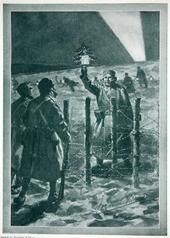
Soldiers fighting the Great War were promised a victory by December and assured they'd be going home to celebrate.  It was never delivered-- the war lasted for four more years.  But on the cold Christmas Eve of 1914, something happened. The German troops, despite the danger, placed lighted candles on trees. They held some of these over their heads, sending a holiday greeting to their enemy. The British, on the other side, saw it and held their fire. They heard the Germans start singing "Stille nacht, Heilige nacht" and immediately recognized the melody. They responded by singing English carols.

Frank Richards, author of the memoir Old Soldiers Never Die, writes about the truce: "We stuck up a board with 'Merry Christmas' on it. The enemy stuck up a similar one. Two of our men threw off their equipment and jumped on the parapet with their hands above their heads as two of the Germans did the same, our two going to meet them. They shook hands and then we all got out of the trench and so did the Germans." He also says that some German soldiers spoke perfect English, one of them even saying how fed up he was with the war and how he would be glad when it was all over. The British agreed.

They lit a common campfire in "No Man's Land", a small bombed out terrain between them. Sitting around it, they exchanged gifts such as whisky, jam, cigarettes and chocolates. The truce lasted through Christmas night, but in some areas, it continued until New Year's Day.

Today, a cross stands near Ypres, Belgium, the place where the trees twinkled as a song of peace interrupted the war. It was created in 1999 and its inscription reads:

"1914 - The Khaki Chums Christmas Truce - 1999. 85 Years. Lest we forget."

"Stille nacht, Heilige nacht" by Josef Mohr and Franz Gruber


Sources:
http://www.stillenacht.at/en/
http://en.wikipedia.org/wiki/Christmas_truce
http://home.snu.edu/~hculbert/silent.htm
http://www.holytrinitynewrochelle.org/yourti14724.html


Miyerkules, Setyembre 23, 2009

the lost years

Last Monday was an Islamic holiday, Eid ul-Fitr.  It marks the end of Ramadan.  It was a non-working holiday so I happily spent the day alternating between watching TV and surfing the net.  Here's an interesting fact that I found: there's a part in both Muhammad and Jesus' life that are unknown, several lost years that are unrecorded.   Muhammad started preaching when he was around 40 years old.  Jesus started when he was in his thirties.  Before all that, there's an information gap between their childhood and adult years.  We do know that Muhammad dabbled in trade and he married at 25 but little is known of him during his later youth.  All we have are speculations but no actual history of who they were and what they did. What happened to them during those years? 

I do hope that someone will discover actual records of the life that they led before their ministry.  Maybe Jesus worked as a carpenter, building furnitures & houses everyday, while Muhammad was a merchant, bargaining with traders and counting his profits & losses.  It just makes them more within our reach-- working, needing the money, tired, bored & frustrated.  I think it makes their history richer. It's funny that such ordinary details could make one's history rich.  It just makes them more human than gods.

But it wouldn't be funny if that's all a person will ever have.  It wouldn't be funny at all if the history that he could've made goes by unrecorded, lost for good.

Miyerkules, Setyembre 16, 2009

the father of the green revolution


2006 Norman Borlaug Congressional Gold Medal
"When the Nobel Peace Prize Committee designated me the recipient of the 1970 award for my contribution to the 'green revolution', they were in effect, I believe, selecting an individual to symbolize the vital role of agriculture and food production in a world that is hungry, both for bread and for peace." - Dr. Norman Ernest Borlaug (1914-2009)

Norman Borlaug was born on a farm near Cresco, Iowa in March 25 1914.  He spent his childhood and teenage years working with the crops and animals.  In 1933, at the urging of his grandfather, he left the farm and enrolled at the University of Minnesota.

His encounters with the unemployed and the starving during the Great Depression shaped his outlook on life.  It was also around this time that he met Prof. Elvin Stakman.  He became involved in Stakman's research on plant breeding methods and the professor suggested that he take up Plant Pathology.

In 1944, he became part of The Cooperative Wheat Research Production Program, which focused on increasing wheat production in Mexico.  It was not easy.  They didn't have enough training and equipment, and the local farmers refused to cooperate.  The epilogue of his book, "Norman Borlaug on World Hunger", reveals his initial regret.  He wrote: "It often appeared to me that I had made a dreadful mistake in accepting the position in Mexico,".

But after several years of research, harvest time finally arrived.   He developed Pitic 62 and Penjamo 62, two disease-resistant varieties of wheat that produced more grain than usual.  By 1963, Mexico achieved production six times larger than in 1944.  95 percent of the crops were Borlaug's varieties.

After Mexico, his wheat strains were sent to India and Pakistan.  In five years, Pakistan's wheat yields increased dramatically from 4.6 million tons to 7.3 million tons.  By 1968, Pakistan became self-sufficient in wheat production.

India produced 20.1 million tons of wheat in 1970. There wasn't enough labor to harvest the crops; not enough carts to bring it to the threshing floor; not enough jute bags, trucks, rail cars, and grain storage facilities. They even closed down schools to use the buildings for grain storage.  They were also able to save 100 million acres of virgin land from being converted into farmland.

He began work in Africa in 1984 with Ryoichi Sasakawa, chairman of Japan Shipbuilding Industry Foundation.  Production of maize, sorghum, wheat, cassava and cowpeas increased.  The project will also be extended to Benin, Burkina Faso, Ethiopia, Ghana, Guinea, Mali, Malawi, Mozambique, Nigeria, Tanzania, and Uganda.

Norman Borlaug passed away last Saturday, Sept 12, 2009 at the age of 95.  He died of lymphoma.  A lot of us, though, didn't know who he was until now.  Scientists predicted that a global famine will happen because of the population explosion, but Norman's discoveries saved us all.  He led a very fruitful life that has yielded much to humanity.

Sources:
http://en.wikipedia.org/wiki/Norman_Borlaug
http://news.yahoo.com/s/ap/20090913/ap_on_re_us/us_obit_borlaug

Biyernes, Agosto 21, 2009

the angel of death and the seven dwarves

Exactly a year ago, I read about Josef Mengele in the Boston website.  He was a doctor in Auschwitz who performed medical experiments on Jews.  I was intrigued by the topic, so I ran a search on it.  Just a few clicks and I ran into Mengele's dwarf family, the Ovitzes.


It was the picture that got me.  They're so charming.  So I got the book and read it immediately.  It's really good but I still wanted to learn more about the Holocaust.  One lunch break, I found myself about to cry in front of my workstation because of Jan Komski's drawings and descriptions of Auschwitz.

I am so thankful to be alive today.

And so lucky.  But not as lucky as Perla Ovitz.
... "Not long before she died, Perla reflected on her fate: 'We were the only family who entered a death camp and emerged from it together," she said. "If I ever question why I was born a dwarf, my answer must be that my handicap, my deformity, was God's way of keeping me alive.'"