Ipinapakita ang mga post na may etiketa na Places. Ipakita ang lahat ng mga post

Linggo, Nobyembre 28, 2010

never thought i'd get here


I've been so busy these past few weeks, I haven't been able to update this blog.  Not a big problem, I don't think anyone reads this, except me!  I really missed writing here.

After two months in the US, I'm finally back in the Philippines!  I'm still jet-lagged; this morning I woke up around 3am.  I can't sleep so I ended up watching episodes of the Big Bang Theory in the bathroom (I didn't want to wake up anyone).

Before coming home, I did a little side trip to one of the cities in my must-see-places-before-I-die list: New York!  This is definitely the highlight of my stay in the US.  I've been thinking of going to this place ever since I hit puberty, when I started watching all those rom-com movies.  I think it started with Cary Grant's "An Affair to Remember" and then came "Sex & the City", which just added more fuel to the fire.  I also heard about the museums and all the art and of course, Broadway.  I just had to go there.  The question was "how?"

So when I got a US onshore assignment on my day job, I jumped at the chance of a sidetrip to NYC.  Everyone thought I was crazy to go there alone, but was there ever a moment in your life that you felt that this was the chance you've always been waiting for?  That nothing will go wrong and that this was meant for you?  I felt it right there.  Never in my life did I thought that I'd be in New York by the end of this year and yet, there I was, standing at the top of the Empire State Building.  It's amazing how things sometimes work out.

There were little miracles.  One time, I was walking around in circles trying to find the correct subway station, somehow I always ended up on the wrong one.  I decided to just go with it and as it turns out, that route was way better than what I had planned.

Then there was a time when someone pointed out a small ad booklet, left near my seat in the bus.  He said that I should get it and it had a really good map of Manhattan at the back.  I depended on that booklet all throughout my trip.

Little miracles.  I believe it helped that my mom was praying for my safety.  Like the surprise Manhattan shuttle service in my Jersey hotel (until 10pm), not being late on all the events I've reserved even though I'm running behind schedule, Ripley's Museum still open at the late hours, being able to cross Central Park without getting lost, attending the Sunday mass, friendly strangers willing to give me directions and take my picture, no waiting time on all the attractions--Lady Liberty, Empire State and the Wall St. Bull, gorgeous weather and trees (it was autumn!), my favorite movies shown every night on my room, cheap delicious food.

For three days, I felt that nothing could go wrong.  The time was mine.

Miyerkules, Oktubre 27, 2010

water everywhere

falls

It was a rainy Saturday last weekend when we went to Zion National Park.  We were planning to do some hiking and sightseeing but it looked like the trip was ruined.  There were no other cars on the road and the downpour was heavy.  We had a dark sky even though it was already 8 am.  I thought of suggesting Vegas, but I decided to wait and see what will happen instead.  Who knows maybe the rain will let up.

Around 10 am, we arrived at the visitor's center and asked if it was okay to go on the easy trails.  The rain stopped a bit but we were worried of landslides or flash floods.  The guide said it was okay so we took some maps and waited for the bus.

As it turned out, Zion became even more amazing because of the rain.  The air was clearer and there were waterfalls everywhere.  We enjoyed taking pictures of the lower and middle Emerald pools.  We spent some time up in Weeping Rock, looking at the hanging gardens and the different colors that showed up on the formations.

One the guides on the bus said that the mighty Canyons were formed simply because of the river.  It rushed and broke through the rocks, paved the way and created a deep chasm.  It sculpted beauty as it moved along.

That's the last trail that we did, the Zion Riverside Walk.  We didn't go through the narrows, we just hiked along the Virgin River, taking pictures and enjoying the view.  We didn't walk as a group and I preferred it that way.  I just went on my own and listened to the sound of the river.  I felt at peace just by being near it.  I read that the term Zion means "a place of refuge, a safe spiritual homeland, like in heaven, or a kind of peace of mind in one's present life."  It's true.

Sources:
http://www.urbandictionary.com
http://www.desertusa.com/zion/du_znpdesc.html

Miyerkules, Oktubre 13, 2010

lonely planet

Last month, astronomers found another planet that could possibly support life, Gliese 581g. It's in a habitable zone near a star, not too hot and not too cold. Such an atmosphere is perfect for having liquid water, and when there's water, there's life. The only problem with this planet is it doesn't rotate, one side is always in the dark and one side always faces the light. This is an exciting discovery though because there could still be places in there that could support life.

"The fact that we were able to detect this planet so quickly and so nearby tells us that planets like this must be really common.", says Steven Vogt, an astronomer from University of California at Santa Cruz, in the report from BBC News.

Discoveries like this remind us just how big the universe is and how maybe, we're not really alone at all. There are so may worlds out there that we do not know of, so many places to discover. There's much to explore, even just on our own planet.   I'm on an onshore job assignment right now in the US and I went to Yellowstone last weekend and it was amazing. The place was beautiful and it was my first time to see a bison in real life and up close. They look funny and cute!

Yellowstone was such a grand place but nothing compares to the happiness of just simply being with the ones you love, wherever that is. I saw the video of the Chilean miners today and I felt so jealous of the hugs they were getting, everybody was waiting for them to come out. I missed home, with all its pollution and craziness. It was kind of sad travelling. Everything was so pretty and clean and really perfect, but it only made me realize just how far away I am. Like an alien in another world.

Huwebes, Setyembre 30, 2010

fossils found

Last week, a construction crew from Southern California Edison, accidentally unearthed a collection of fossils dating 1.4 million years back. They were drilling in San Timoteo Canyon to build a new substation.

"If you step back, this is just a huge find," says Rick Greenwood, a director in SCE. "Some of the things I personally find fascinating are the prehistoric camels and llamas and horses and deer. I don't think most people even have the concept that those types of animals were roaming around here more than a million years ago."

They also found a rich assortment of plant life like birch, pine and sycamore, indicating that the area used to be a marsh land, which probably preserved the fossils well. Aside from the animals mentioned, they also found bones of a ground sloth, an ancestor of the saber-toothed tiger, frogs, salamanders and rodents. Scientists are still examining the fragments but its possible that some of the bones may even belong to some new species we didn't know existed.

According to Tom Demere, a paleontologist from the San Diego Museum of Natural History, the fossils could provide a more comprehensive view of what it was like in Southern Cali a million years ago.

"We have a fuzzy view of what this time period was like in terms of mammal evolution," Demere said. "A discovery like this - when they're all found together and in a whole range of sizes - could really be an important contribution."

Some of the bones will be displayed in Western Science Center in Hemet. Scientists and researchers can also be granted access to the collection.

Sources:
http://news.yahoo.com/s/ap/20100921/ap_on_bi_ge/us_fossil_find
http://www.latimes.com/news/science/la-sci-fossils-20100921,0,3128425.story
http://www.thestate.com/2010/09/20/1475249/calif-utility-stumbles-on-14m.html
http://www.pe.com/localnews/inland/stories/PE_News_Local_D_fossils21.2bc5f26.html

Biyernes, Agosto 20, 2010

loofah

Before writing this entry, I had always associated the word "loofah" with the scrubber used for cleaning the body.  I never thought it's the actual english name of a vegetable, and it's a vegetable I'm very familiar with.  We call it "patola" here in the Philippines. I always associate it with the yummy dish, "patola with miswa".


In Paraguay, the loofah is improving lives. In a project headed by social activist, Elsa Zaldívar, local women in Caaguazú started planting and processing the vegetable. They made products like mats, slippers and insoles out of dried loofahs. It was a successful venture and they were even able to export it to Europe. It gave the women a steady source of income.

However, a lot of raw material were still wasted, so Elsa got the help of industrial engineer, Pedro Padrós, to see if they can use it to build houses for the people.


“We want to find sustainable housing alternatives for the poor, while also discovering new markets for their agricultural products, particularly the loofah. This is a perfect combination,” she says.

Pedro was able to create a machine that melts plastic, and he mixed the result with loofah and other vegetable fibres. After lots of experimentation, they produced a sturdy material that's lightweight, safe and recyclable. They also received a grant from Inter-American Development Bank for the development of another machine that can produce the housing panels.

“Because we’re using fibres that are completely renewable, we can stop using lumber for construction. That’s very important in Paraguay because we’ve already reduced our original forest to less than ten per cent of Paraguay’s territory,” Elsa said. “We’re running out of trees.”

As a result of her work, Elsa was awarded the Rolex Award for Enterprise last 2008. They will be using the money to fund the creation of a promotion centre, three model houses that showcases the loofah panels and a video that details the project for other interested groups.

Sources:
http://rolexawards.com/en/the-laureates/elsazaldivar-the-project.jsp
http://en.wikipedia.org/wiki/Luffa
http://keetsa.com/blog/recycle/paraguay-homes-built-out-of-loofah-and-corn-husks/
http://earthfirst.com/low-cost-housing-made-from-loofahs/
http://www.resnicowschroeder.com

Martes, Hulyo 13, 2010

chili pepper chill

http://www.thedailygreen.com/

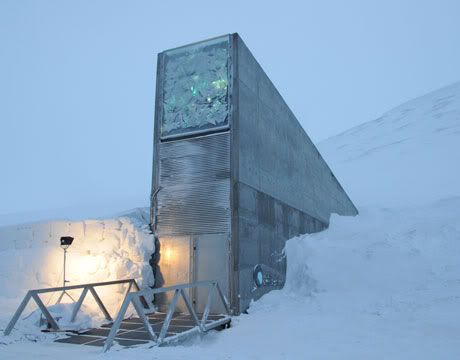
Deep in the Arctic, carved inside a stone mountain, lies the Doomsday Vault. It's a locked, airtight structure that contains something more precious than money or gold. It carries seeds. Half a million variety of crops from different countries all over the world.  It's our safety deposit box against climate change, wars or any catastrophes.

Last week, several chili pepper seeds like, Wenk's Yellow Hots, Pico de Gallos (this a common ingredient in salsa) and San Juan Tsile were added to the collection.  They were delivered by a delegation of US Senators.

"The journey of the chili pepper from the indigenous cultures of the Americas to its current status as an essential ingredient in many Indian and Asian cuisines is a marvelous example of the global disbursement of agricultural diversity," Senator Tom Udall said. "I'm very pleased that we are saving one of New Mexico's most famous and most delicious crops in the Svalbard Global Seed Vault."

Besides chili, they also brought other seeds like peanuts and melons. There is now approximately 250 million seeds in the vault, with each variety having 500 seeds.  Check out their database here.  We can expect that number to grow in the future, but I hope we don't have use them anytime soon.

Sources:
http://en.wikipedia.org/wiki/Svalbard_Global_Seed_Vault
http://www.valleymorningstar.com/news/spices-76967-chili-vault.html
http://news.bbc.co.uk/2/hi/science_and_environment/10603656.stm

Linggo, Hunyo 27, 2010

like death warmed over

Crematoriums in Sweden found a sustainable way to cut costs and be environmentally-friendly. After cremating a body, they will be reusing the exhaust produced to keep their building warm, instead of releasing it out into the air. They are also planning to expand and use the energy for homes as well, making them a crematorium power station. It's a controversial idea but certainly not a bad one (for me at least!).


Aside from human corpses, they have also turned on stray rabbits as energy source.  These animals overpopulate some their parks and destroy plants and trees.  Thousands are killed each year.  So what they do is they bring these dead rabbits to a heating plant to be cremated.  The heat is then redirected to the homes in Värmland, Sweden.

Aside from rabbits, other animal carcasses and wastes are used to produce energy.  They call this fuel, Biomal.  Here's a simple chart I got from treehugger that shows the process:


From Biomal.com: "..The raw material is just crushed and grinded and then pumped to a fluidised bed boiler where it is co-combusted together with a base fuel such as wood chips, peat or municipal waste. Energy is recovered from the animal by-products by producing renewable heat and electricity and the net outcome of energy is considerably increased."

Recently, Taiwan also adopted the cremation idea.  Instead of heating though, Taipei Mortuary Services Office will be using it to power the air-conditioning system of their receiving area and possibly the lighting system of their building.

Sources:
http://www.independent.co.uk/life-style/house-and-home/cremated-bodies-to-power-aircon-in-taiwan-1801115.html
http://www.treehugger.com/files/2010/05/cow-carcasses-heat-swedish-homes.php
http://www.spiegel.de/international/zeitgeist/0,1518,654916,00.html
http://www.freerepublic.com/focus/news/2156917/posts

Sabado, Abril 17, 2010

holy child of cebu


One of the places I went to during my grand summer vacation is an old church in Cebu City, the Basilica Minore del Santo Niño. There, inside, is the oldest Catholic relic in the Philippines, the Santo Niño de Cebu.

It has an interesting history. The statue was brought to the country in 1521 by Ferdinand Magellan. He gave it as a gift to the Rajah and his wife when they were baptized. Magellan was killed that same year. He did not conquer the land.

44 years later, Miguel Lopez de Legazpi arrived in Cebu. The natives were hostile. There was another battle and most of the villages were burned. When it was all over, they went through the debris. They were surprised to find the Catholic icon under the ashes. It was inside a pine box and it wasn't burned at all, only a bit old and worn because of its age.

They considered it a blessing and a miracle. They built a small church, made of bamboo and mangrove palm, in the place where they found it.  It has since expanded and is now known as the Basilica Minore del Santo Niño. Surrounding the church and spreading through the country are stories and testaments of the miracles performed by the Holy Child to this very day.


Sources:
http://www.santoninodecebu.org/history.html
http://en.wikipedia.org/wiki/Santo_Niño_de_Cebú
http://www.malapascua.de/

Miyerkules, Enero 27, 2010

pinatubo

"Pinatubo", means "to make something grow". It's also the name of an active volcano here in the Philippines. It erupted almost two decades ago, July 1991. I remember it was raining and we were watching the news. We looked out the window and everything was covered in ash. We thought it was snow.

About 800 people were killed and thousands more lost their home & livelihood. I think the ones most affected are the Aetas, an indigenous tribe living in the mountains. Up there, they had their own world, standing still and unchanging-- unaffected by what's happening in the country. They've never been under Spanish or American rule. I'm not even sure if they participated in the war. According to WikiPilipinas, "They have adjusted to social, economic, cultural and political pressures by creating systems and structures within their culture to buffer the impact of change."

When the volcano erupted, they were uprooted and forced to come down, relocated to government-organized resettlement areas. Living here is hard, they were given small portions of land but it's not ideal for growing crops. Some found work as farmhands, some as beggars. Most of them are illiterate and uncivilized. Marginalized and discriminated, it's almost impossible to go back to their original way of life.

Today, several support groups, like the EVACF, are helping the Aetas. They teach them entrepreneurship, provide loan assistance and scholarship. You can also help out, click here. Last year, President Arroyo handed out CADTs (Certificates of Ancestral Domain Titles) to 601 Aeta families. Another NGO, Foundation of Our Lady Peace Mission, has another interesting project: the Indigenous Peoples Community Health Workers Development Program, where they train "barefoot doctors" (chosen members of a tribe) on things like proper health education, diagnosis and treatment of common illnesses, parenthood and family planning. These barefoot doctors go back, and serve their community, as well as spread the knowledge to the rest.

Then, last February 2009, a series of children storybooks, written and illustrated by the Aetas and Mangyans (another indigenous tribe) was published.  It tells stories about their past, and their Gods.  They've waited for a very very long time and they still have a long way to go but I think slowly, the Aetas are moving on with life.

No matter how much we resist, change really is inevitable. It will come, whether we're prepared or not. And when it does, it will take something away-- something we love, our belongings, our beliefs or maybe even our way of life. But it doesn't mean we'll be left with nothing, because with change comes the chance to grow. I went to Pinatubo last weekend with some friends and I was amazed at how beautiful it is now-- calm blue water, happy tourists, clear skies with scattered clouds, small plants and trees already covering the mountains and the warm sun shining on us. It's like being inside a painting.


Sources:
http://en.wikipedia.org/wiki/Mount_Pinatubo
http://en.wikipilipinas.org/index.php?title=Aeta
http://www.evacf.org/livelihood.html
http://www.evacf.org/Help.htm
http://newsinfo.inquirer.net/inquirerheadlines/nation/view/20090608-209288/100-tribal-healers-gather-for-summit

http://www.indigenousportal.com/Education/Mangyan-Aeta-folk-write-own-storybooks.html

Biyernes, Enero 15, 2010

help haiti

Miyerkules, Disyembre 23, 2009

heavenly peace


www.stillenacht.at

In 1816, Father Josef Mohr wrote a poem about the night when Christ was born. It was a simple poem, describing a time of happiness and longing for peace and comfort. At that time, he was an assistant priest in Mariapfarr, Austria. The Napoleonic wars had just ended, and an economic depression left many unsure of the future.

Two years later, he showed it to Franz Gruber, the choirmaster, and asked him if he could compose a melody. It was the day before Christmas. Their church organ was broken, and they needed a song for the Mass that could be accompanied by a guitar. Franz got to work and on that Christmas eve, "Stille Nacht, Heilige Nacht" (Silent Night, Holy Night), was born. Father Mohr sang tenor and played the guitar while Franz sang bass.


A hundred years later, their song became part of a miracle.

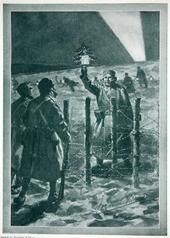
Soldiers fighting the Great War were promised a victory by December and assured they'd be going home to celebrate.  It was never delivered-- the war lasted for four more years.  But on the cold Christmas Eve of 1914, something happened. The German troops, despite the danger, placed lighted candles on trees. They held some of these over their heads, sending a holiday greeting to their enemy. The British, on the other side, saw it and held their fire. They heard the Germans start singing "Stille nacht, Heilige nacht" and immediately recognized the melody. They responded by singing English carols.

Frank Richards, author of the memoir Old Soldiers Never Die, writes about the truce: "We stuck up a board with 'Merry Christmas' on it. The enemy stuck up a similar one. Two of our men threw off their equipment and jumped on the parapet with their hands above their heads as two of the Germans did the same, our two going to meet them. They shook hands and then we all got out of the trench and so did the Germans." He also says that some German soldiers spoke perfect English, one of them even saying how fed up he was with the war and how he would be glad when it was all over. The British agreed.

They lit a common campfire in "No Man's Land", a small bombed out terrain between them. Sitting around it, they exchanged gifts such as whisky, jam, cigarettes and chocolates. The truce lasted through Christmas night, but in some areas, it continued until New Year's Day.

Today, a cross stands near Ypres, Belgium, the place where the trees twinkled as a song of peace interrupted the war. It was created in 1999 and its inscription reads:

"1914 - The Khaki Chums Christmas Truce - 1999. 85 Years. Lest we forget."

"Stille nacht, Heilige nacht" by Josef Mohr and Franz Gruber


Sources:
http://www.stillenacht.at/en/
http://en.wikipedia.org/wiki/Christmas_truce
http://home.snu.edu/~hculbert/silent.htm
http://www.holytrinitynewrochelle.org/yourti14724.html


Linggo, Disyembre 20, 2009

on silence

There's a small chapel on the 9th floor of the building where I work. Lately, I've been going there more often, following the afternoon Mass. I sit by myself, breathing in the incense. I stare outside or at the floor, think about work, my life so far, or what I will do in the future. Sometimes, flute or piano music plays from the speakers, or a catchy song plays in my head. I secretly watch the others, some are reading a novena book while some are praying. I try to guess what they are asking for and I hope that they get it.

I'm not sure if this is Peace. I often feel guilty for leaving my workstation, going all the way down there and then sitting for 5 to 10 minutes doing nothing. I feel like I'm wasting time not being busy, but I feel happy as well because I have a place and a time all for myself. Nobody I know goes there at that hour. A small window of freedom. I've been going for over a week and it's becoming a habit.

I hear no clever talks, no humor, no kind words, no sharing of one's self. It's blank-- but it's not empty. Something fills me, and I'm craving it more and more. I didn't realize my hunger for silence; and something is happening to me that I didn't expect: I'm more focused at work, better at conversations, more patient and more tolerant of others. Those moments bring out something in me. Out of nothing, the better part of me grows.

Linggo, Setyembre 27, 2009

ondoy / ketsana

Ondoy (Ketsana)
www.pagasa.dost.gov.ph
Yesterday, I was trying to write a post when I heard my mother yelling at someone on the phone.  She was near panic because there was a big flood on the other side of our subdivision where some of our relatives are living.  They live near a creek and the water overflowed.  We didn't have any problems on our side so I thought the rain was no big deal but as it turns out, it's a different story for the other areas of the Metro.

We were all worried of what could happen if the rain didn't let up.  A lot of houses were already submerged in water.  People, including children, are on the roof of their houses or on elevated parts of street, helpless and waiting out the storm.  Some are guarding their appliances because it might get stolen.  They were also worried about the electricity.  One live wire plus flood equals hell.

My mom paid two guys to fetch our cousins.  They passed one street where the water was chest high, so one of the kids had to be carried.  They also had to be careful of open manholes while dodging the trash and cockroaches drifting on the flood.  They were crying when they arrived at our place.  Their mother was left behind, guarding the house and things while their father had gone off to work and had been stranded for hours.

The downpour slowed down in the evening and soon, our aunt was able to go visit us.  The kids ran and hugged her, she just laughed it off.  We gave her a blanket and some old clothes to bring back to the others who didn't have anything to wear.  They spent the night at our house.

Today, the sun is out and the storm moves on but water is still everywhere.  The weather bureau says that nearly a month’s worth of rain fell in just six hours over Metro Manila.  Consequently, Marikina and Pasig River overflowed.  We had local movie stars calling TV programs from their rooftops asking to be rescued.  A lot of people are still stranded and couldn't get home to their loved ones who are trapped and helpless.  As of 10 am today, more than forty people have died and there are some that are still missing.

There's a news program right now, where you can call in and pledge a donation.  One of the hosts was trying to rationalize, saying that this is God's way of making us realize that we need to call him and he's making us strong.  Other people are blaming the Government for not fixing the drainages and spending millions of emergency fund money for foreign trips.  Some point a finger to humanity for destroying nature.  However way you want to look at it, I think all of us contributed to the problem.

The challenge of this blog is to see the good in things but right now, I don't think there's anything good in this tragedy.  I'd like to agree with the host and say that this will make us strong and united and all that, but really, isn't it a whole lot better if the storm didn't happen in the first place?  I'd still prefer to live in a flawless world, thank you very much-- but that will never happen will it?  Shit happens every single day and the chances of us living in a harmonious environment with the perfect climate are growing slimmer every second.  No, I don't think I'll be able to find the good in here-- but I'm hoping that we'll be able to find the good in us.


Donations to The Red Cross Rescue and Relief Operations can be sent via Globe or Smart. Send RED (space) (amount) to 2899 (Globe) and 4483 (SMART). Donations can be made at 10, 25, 50 and 100. Kindly repost this.

http://helpondoyvictims.wordpress.com/
http://pedestrianobserver.blogspot.com/2009/09/help-ondoy-victims-in-philippines.html
3 drop-off areas designated for Ondoy victims' donations

Huwebes, Setyembre 3, 2009

putpockets in london streets

A putpocket is the exact opposite of a pickpocket.  They slip money in your pockets without you knowing.  If I hadn't read this article about them, I would've taken this to be an urban legend.  I mean, what for??  Turns out this was an ad campaign for TalkTalk, a British mobile operator.  The idea is that TalkTalk puts money back in your pocket by making you pay less for phone calls-- so switch to TalkTalk now! heheh.

Carried out by a team of 20 reformed pickpockets, this is a unique ad campaign and it will surely cheer people up during these gloomy times.  Finding extra cash when you least expect it, especially when you need it the most, is an instant upper.  I saw the video on YouTube and just seeing the sign, "Rejoice! Putpockets operate in this area." makes me smile.


Why can't we do that here in the Philippines??.. but  I guess if we did, everybody would be hanging around those areas for hours pretending to be some bystander or a pedestrian.  Or maybe people will just beat up those putpockets, thinking that they're really snatchers/pickpockets instead.


Is it better to be smart in giving or should we just give mindlessly away?  TalkTalk's ad campaign is what I would call smart giving.  It's an investment.  I know some smart givers who donate food instead of money to beggars so it won't be spent on gambling or rugby (to get high on).  Some would rather give their money to charities.  Some doubt the charities and give to the church.  Some believe in providing work for others, while there are others, really smart givers-- that prefer not to give at all, haha!  How in the world did giving become so complicated?

Sources:
http://www.reuters.com/article/idUSTRE57I45C20090819
http://www.youtube.com

Sabado, Agosto 22, 2009

afloat

In one of the beaches in Mexico, a strange island can be seen floating nearby. A man-made place created from thousands of empty plastic bottles. This is the Spiral Island.

It was built through good old-fashioned hard work. Richie Sowa, the owner of Spiral Island, got all the empty bottles he can find and put them all in one big net. Once he had the base in place, he put plywood, bamboo, white sand and plants on top of it.

Construction started in 1998 and since then Richie never stopped. Even when Hurricane Emily came and destroyed most of it. He rebuilt it again and until now he is always adding something new. It currently measures 20 meters in diameter. It has beaches, a house, 2 ponds, a solar-powered waterfall/river, and solar panels. His source of food are the plants in the island, cooks them using a solar cooker, and his water comes from the rain. Amazing.

Here's a kid on her own island.  She can't swim and we weren't able to bring any floaties.

floaties


Sources:
http://en.wikipedia.org/wiki/Spiral_Island
http://greenupgrader.com/1821/spiral-island-constructed-from-recycled-bottles/